

SECOND SIGHT
PERSONAL GAME CONCEPT
GAME & LEVEL DESIGNER
Experience a world where your own perspective is never yours. Navigate through the eyes of others, adapt to shifting viewpoints and discover a new way to experience space, perception and control.
01
CONCEPT &
DESIGN PILLARS
The concept is built around an unconventional second-person perspective.
Rather than controlling a character through a traditional camera, players must navigate the world by observing themselves through the eyes of others. This fundamental shift in perspective creates unique opportunities for exploration, navigation and environmental puzzle-solving.
My design approach focuses on transforming a visual constraint into a meaningful gameplay mechanic, exploring how perception, spatial awareness and player agency can interact within a dystopian world shaped by surveillance technology.
OBSERVE
Experience the world exclusively through the eyes of others, never through your character’s own perspective. Interpret unfamiliar camera angles, observe environmental details and identify potential dangers through connected devices. Every viewpoint reveals a different fragment of the environment, challenging players to develop their spatial awareness and understand their surroundings without relying on a traditional third-person camera.
VISUAL CHAIN CONNECTION
Navigate an interconnected network of surveillance cameras, drones, smartphones and smart glasses by manually switching between devices visible from your current perspective. Build logical chains of connections to extend your visual reach, discover new observation opportunities and overcome restricted access or disrupted signals. Each device introduces unique capabilities and limitations, turning the selection of viewpoints into a strategic part of exploration and puzzle-solving.
NAVIGATE
Guide your character through complex environments using perspectives that may be distant, obstructed or constantly changing. Anticipate blind spots, memorize spatial layouts and continue moving even when your character disappears from view. Reconstruct visual chains to regain contact, adapt your movements to unfamiliar camera angles and overcome environmental obstacles through observation, anticipation and careful navigation.
02
GAMEPLAY FEATURES
Explore a unique gameplay experience where perception becomes your greatest tool and limitation. Switch between connected viewpoints, navigate beyond your field of vision and overcome environmental challenges through observation, spatial awareness and strategic use of surveillance technology.
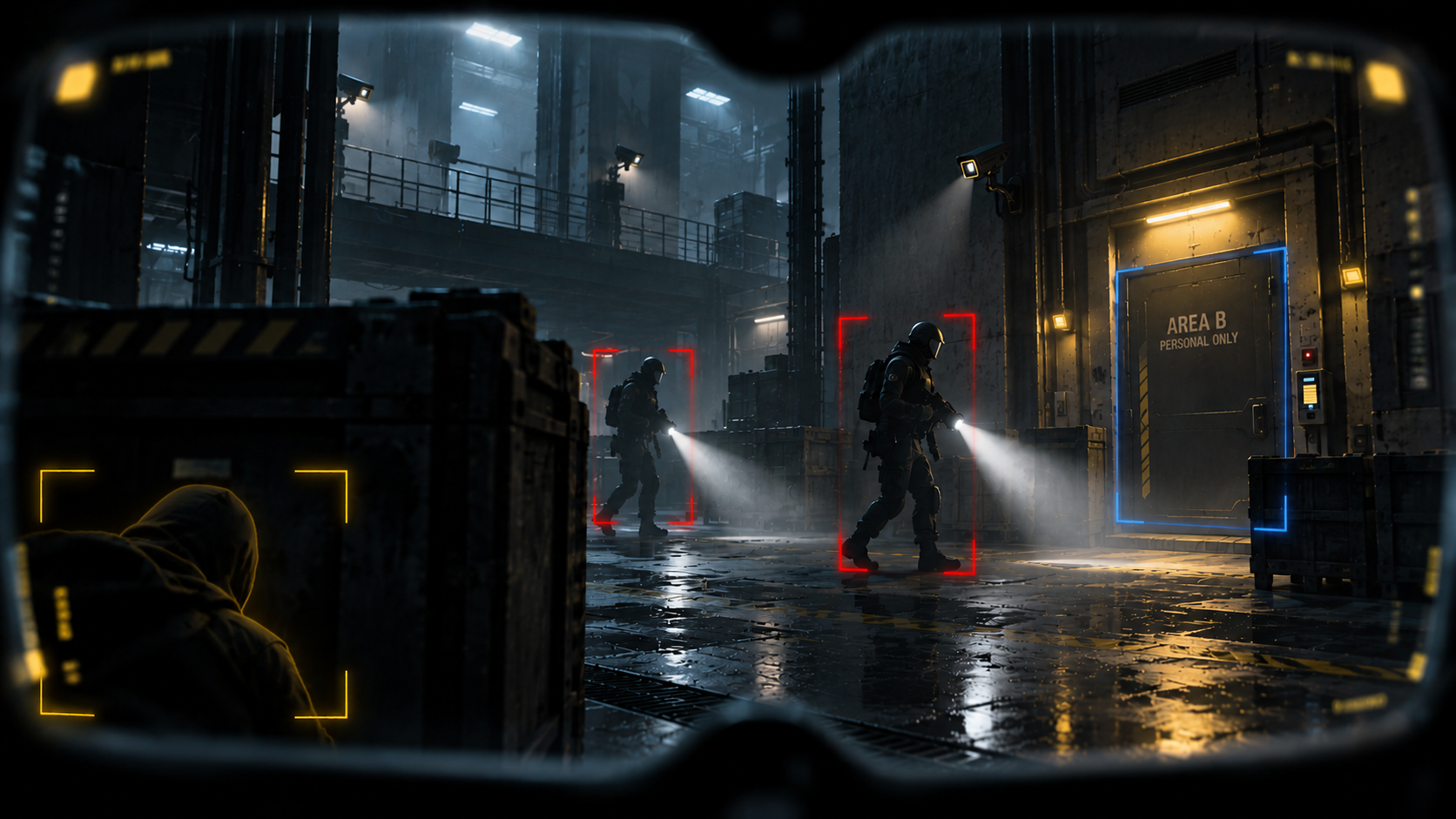
SECOND-PERSON PERSPECTIVE
Experience a unique perspective where you never see the world through your character’s own eyes. Instead, observe and control your character through connected cameras, surveillance systems and the devices of surrounding individuals. Each viewpoint offers a different interpretation of the environment, challenging traditional navigation and transforming the camera itself into a fundamental gameplay mechanic.
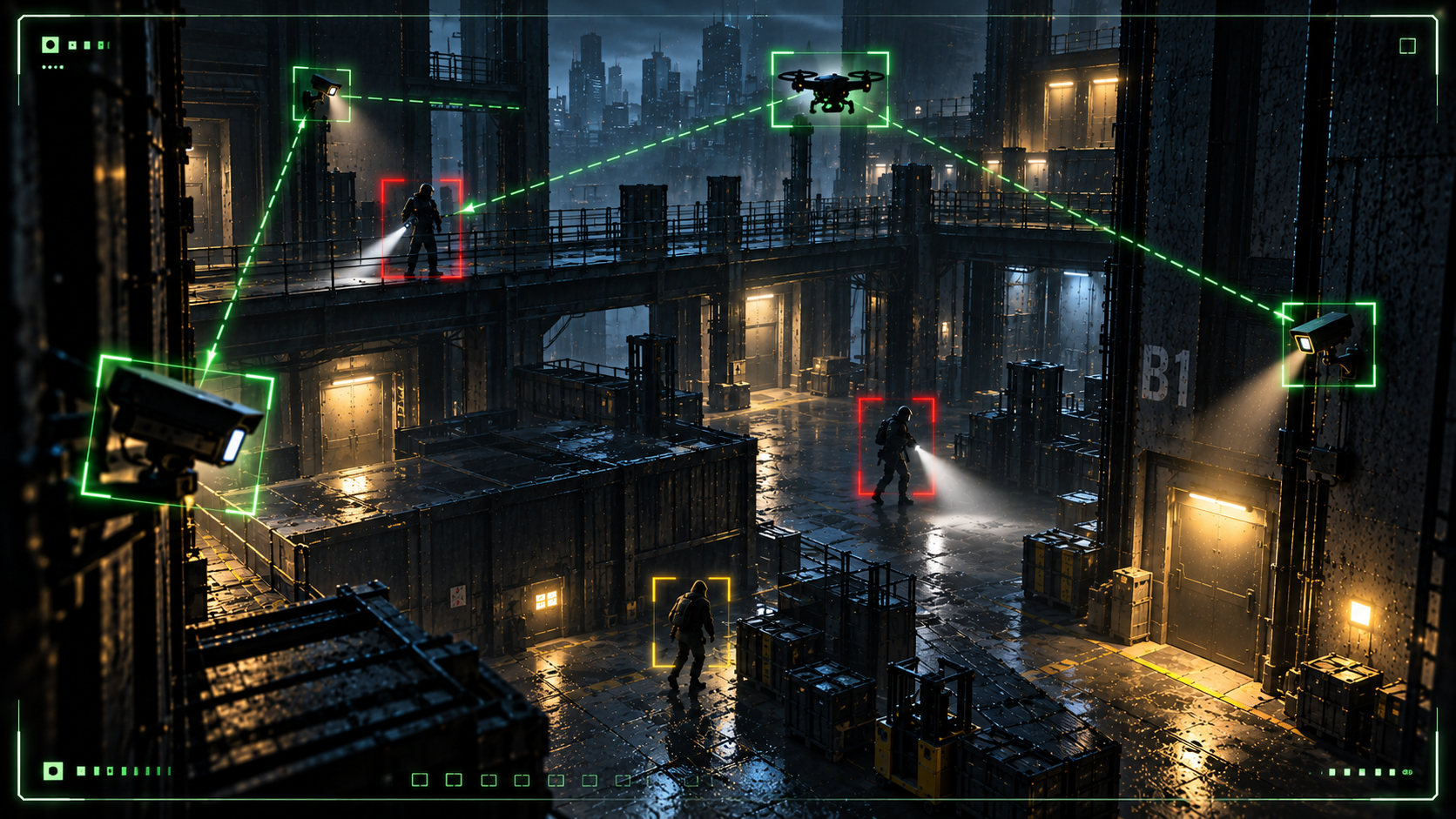
VISUAL CHAIN CONNECTION
Navigate an interconnected network of cameras, drones, smartphones and smart glasses by manually switching between devices visible from your current perspective. Each connection reveals new observation opportunities, allowing you to progressively extend your visual reach. Build logical chains to access distant viewpoints, bypass visual obstacles and discover alternative ways to explore the environment.
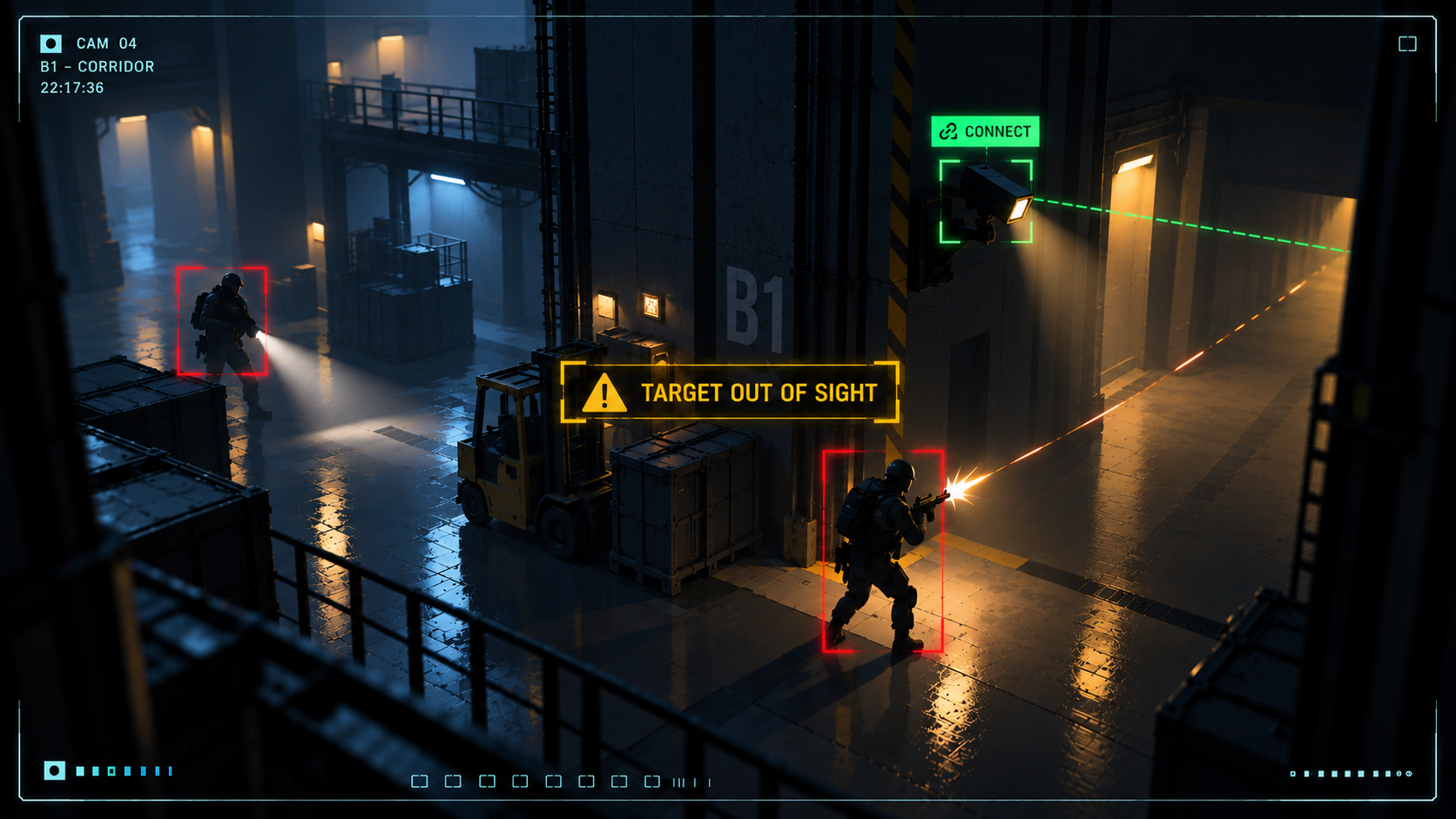
OUT OF SIGHT
BLIND MOVEMENT
Maintain control of your character even when they disappear from every available viewpoint. Navigate unseen spaces using your memory, spatial awareness and understanding of the environment, without relying on direct visual feedback. Every movement into the unknown becomes a calculated risk, forcing you to anticipate obstacles, estimate distances and decide when to advance without knowing exactly what lies ahead.
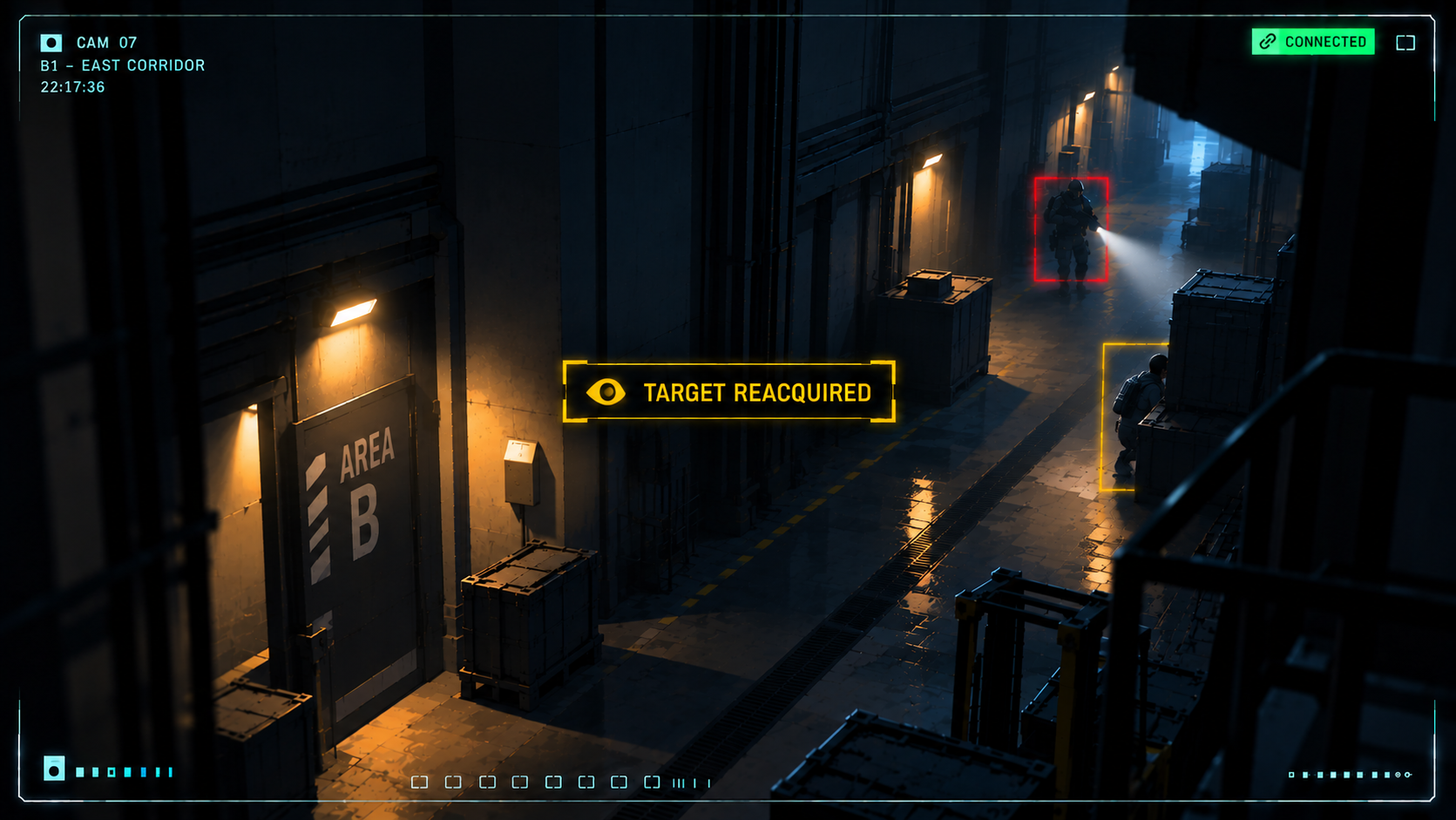
VISUAL RECOVERY
Losing sight of your character introduces a new challenge: finding them again. Explore the surrounding network by switching between connected viewpoints, searching for a camera capable of restoring visual contact. Follow possible connections, interpret unfamiliar locations and reconstruct a path through the surveillance system. Recovering visibility becomes an environmental puzzle that rewards observation and spatial reasoning.
CAMERA BEHAVIORS
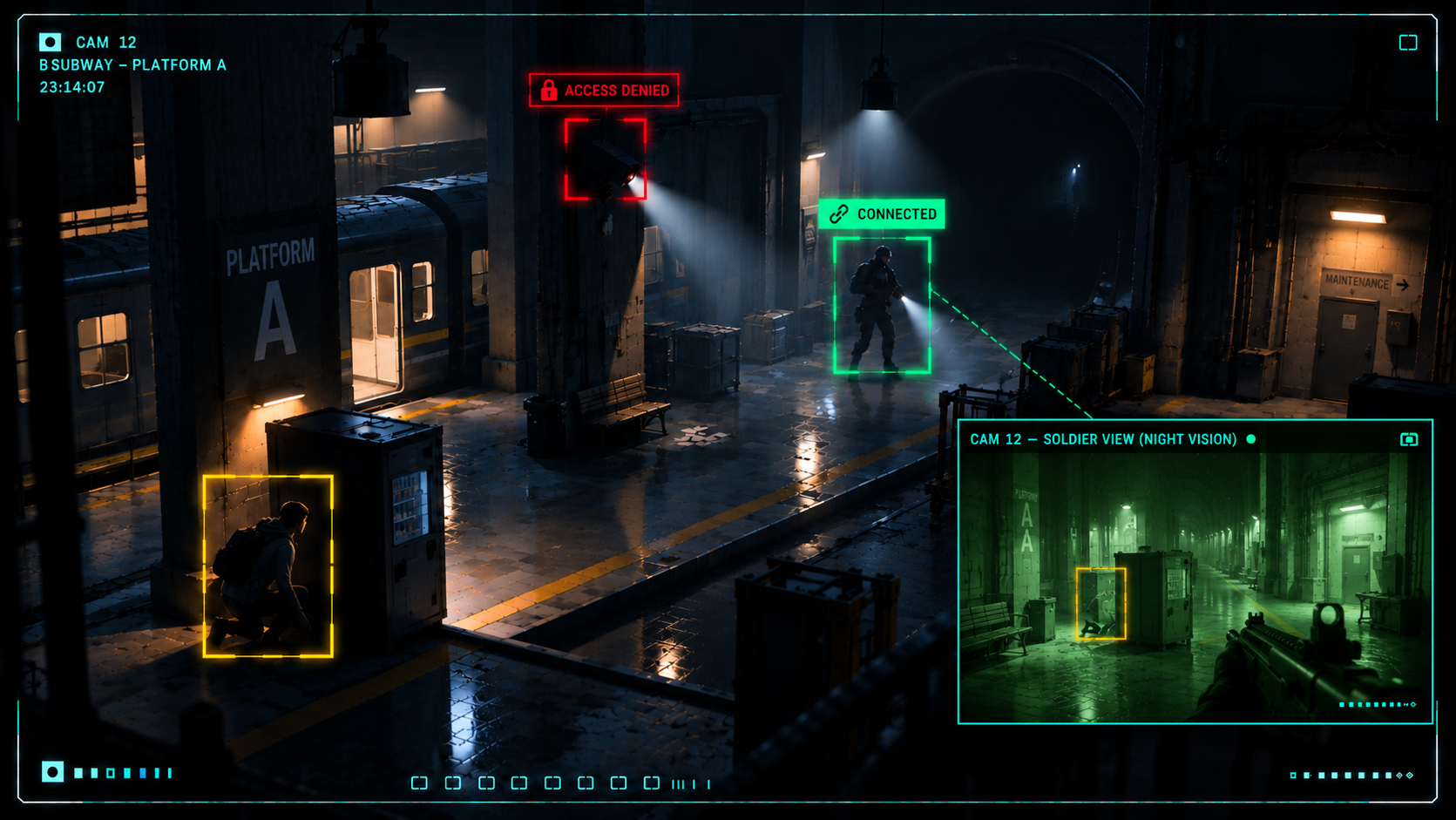
Every connected device introduces its own visual capabilities and limitations. Navigate through fixed cameras with restricted viewing angles, identify locked devices that interrupt your visual network and adapt to feeds affected by signal interference. Specialized technologies, such as night vision, reveal information hidden in darkness. Understanding these differences is essential to selecting the right perspectives and overcoming environmental challenges.
ENVIRONMENTAL PUZZLES
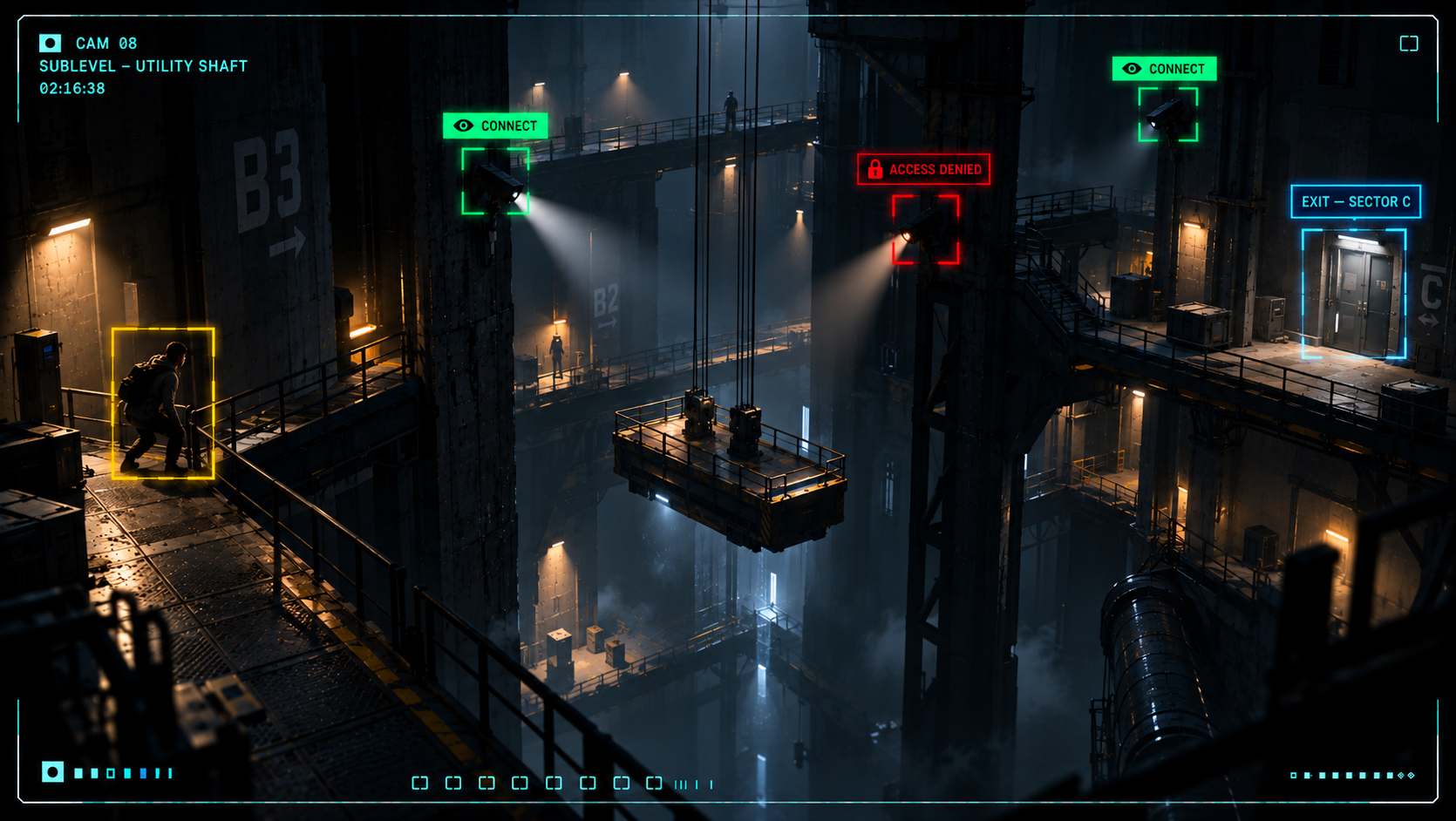
Solve spatial challenges built around perception, visibility and the limitations of connected technology. Identify useful camera positions, establish visual chains and navigate areas where direct observation is impossible. Combine different viewpoints and device capabilities to understand complex spaces, overcome restricted connections and discover routes that would remain inaccessible through conventional navigation.
03
MISSIONS &
RESPONSIBILITIES
As the creator of SECOND SIGHT, I developed an original game concept built around an unconventional second-person perspective. My work focused on defining the creative vision, establishing the core design pillars and designing interconnected gameplay systems that transform surveillance technology, limited visibility and shifting viewpoints into meaningful player interactions.
Beyond the central mechanic, I explored how camera networks, visual restrictions and spatial awareness could shape exploration, navigation and environmental puzzles. This involved defining consistent interaction rules, designing complementary mechanics and conceptualizing gameplay situations where observation, anticipation and strategic decision-making become essential to progression.
- Created the original concept and defined its dystopian science-fiction setting.
- Established the core second-person perspective and its impact on player experience.
- Defined the three design pillars: Observe, Connect and Navigate.
- Developed the overall gameplay vision around surveillance, perception and spatial awareness.
- Designed the manual viewpoint-switching mechanic across connected devices.
- Established visibility-based rules for building and navigating camera chains.
- Defined blind movement and visual recovery as complementary gameplay systems.
- Explored distinct camera behaviors, including fixed viewpoints, locked access, signal interference and night vision.
- Defined the relationship between player control, visual feedback and camera accessibility.
- Explored the readability challenges introduced by unfamiliar or obstructed viewpoints.
- Established visual communication principles for camera connections, targets and access restrictions.
- Structured the concept’s mechanics and design intentions into a coherent gameplay framework.
04
CONCEPT ARTS
Explore the dystopian world of SECOND SIGHT through a collection of concept illustrations depicting its environments, atmosphere and gameplay possibilities. From surveillance-controlled city streets to isolated industrial facilities, each scene explores how architecture, technology and shifting perspectives can transform ordinary spaces into challenges of observation, navigation and survival.
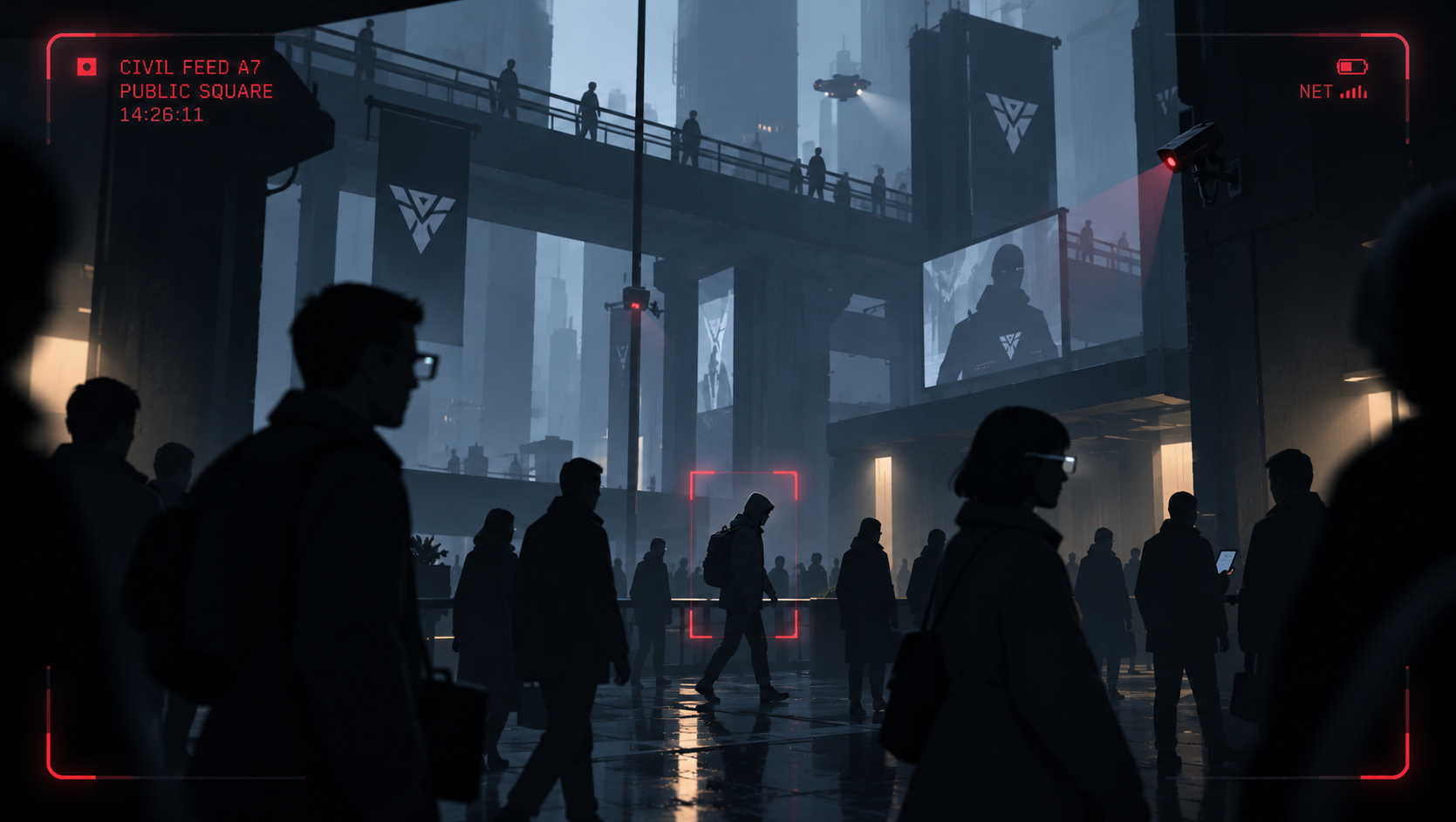
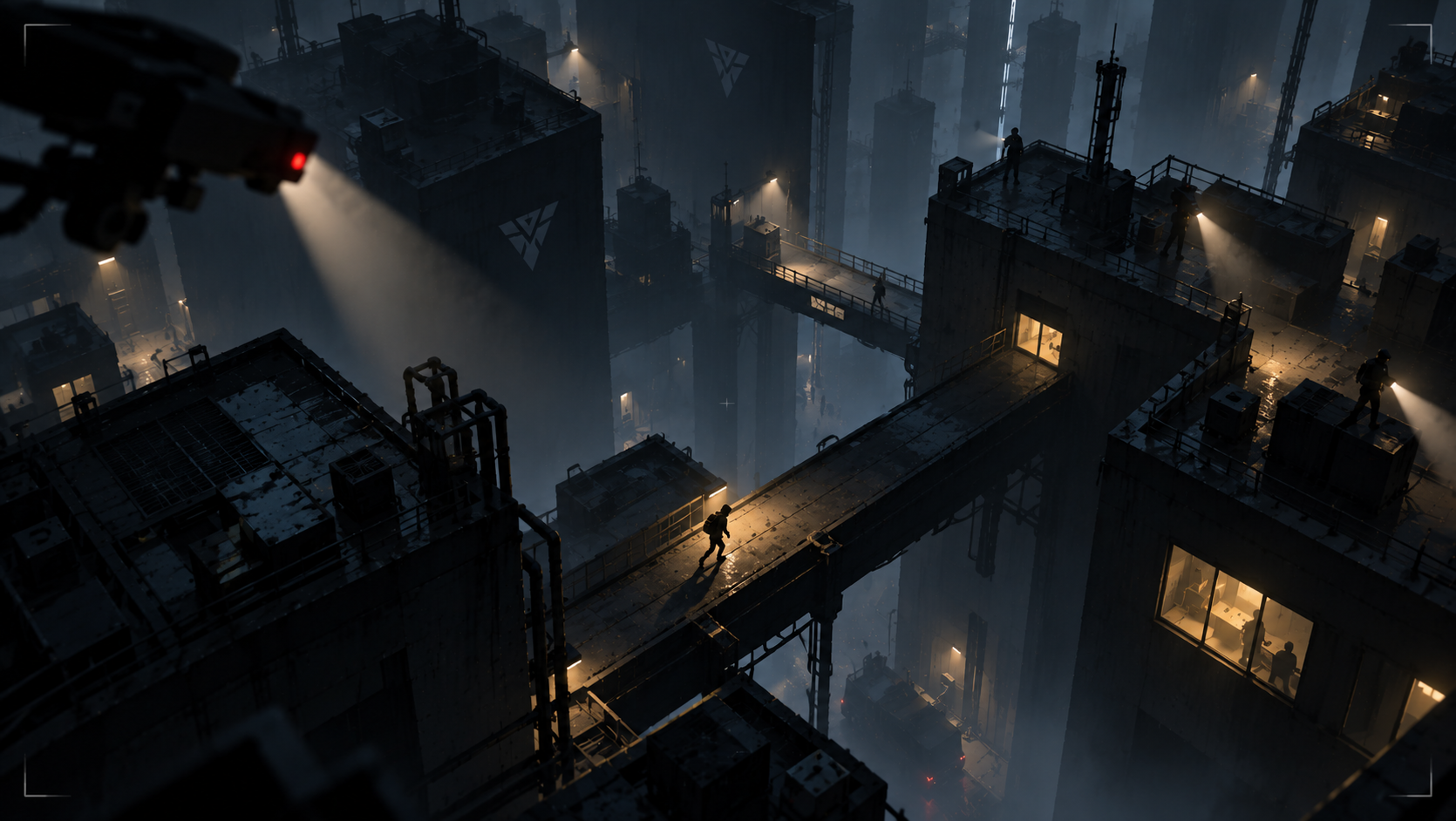
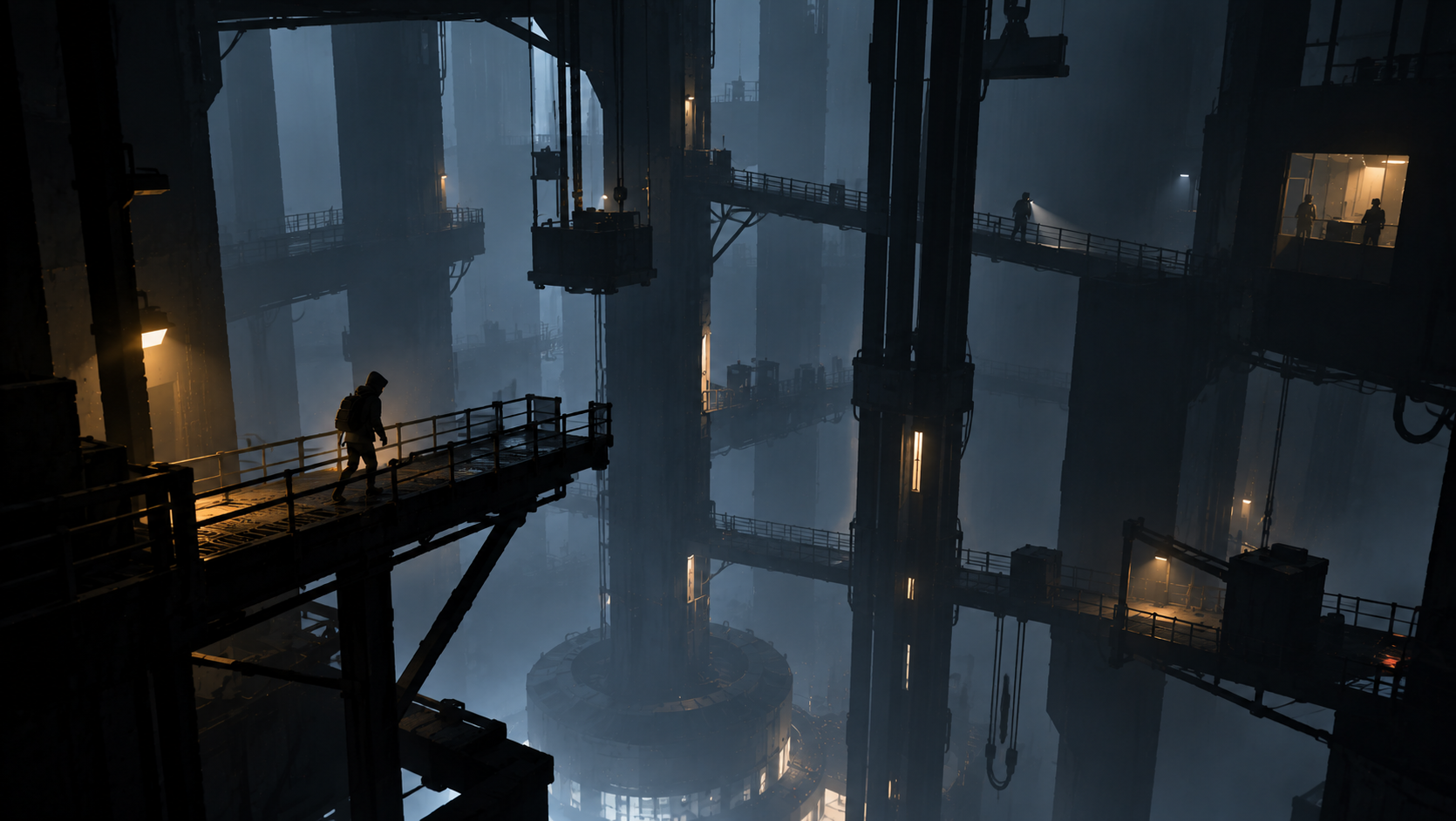
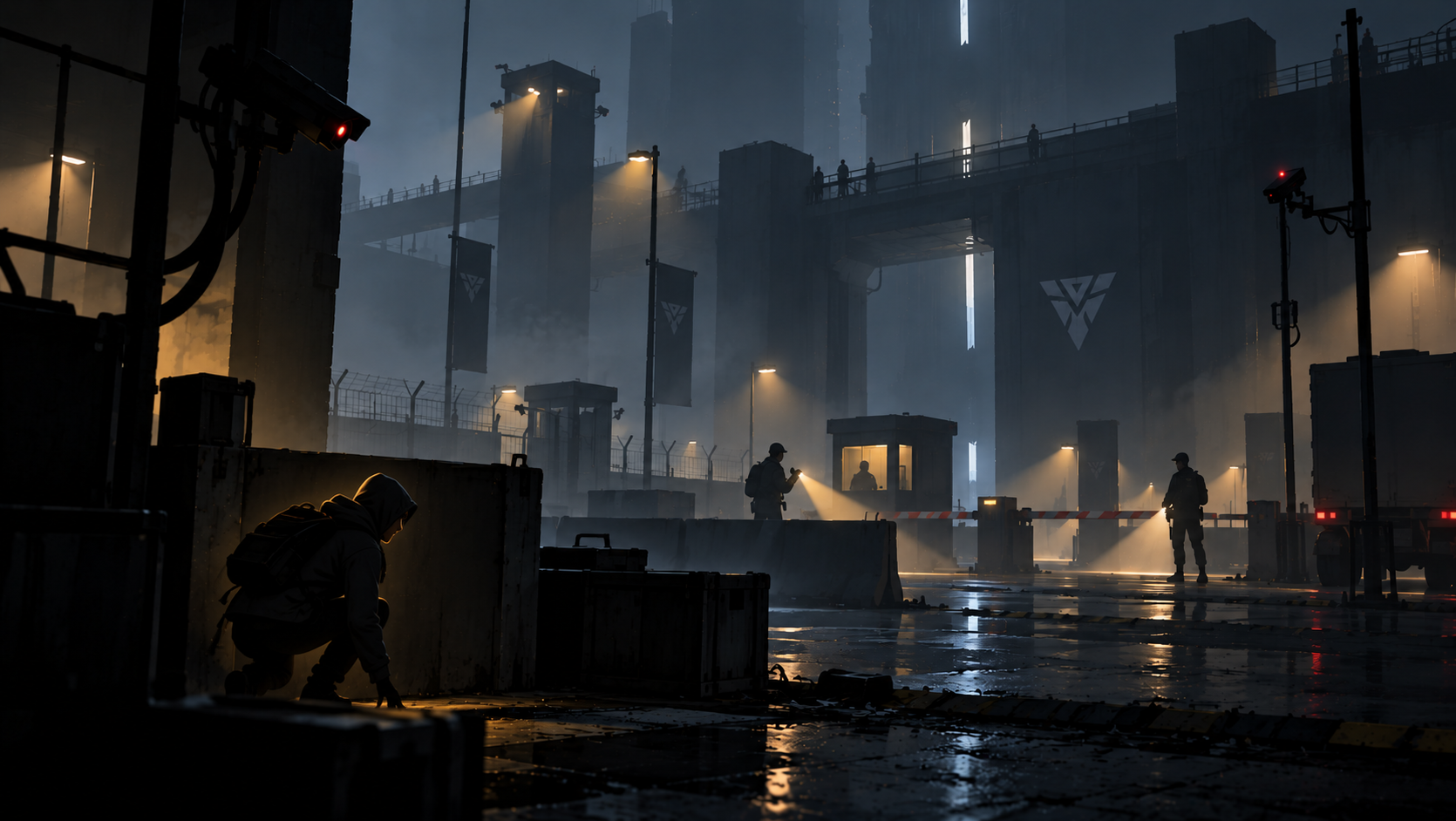
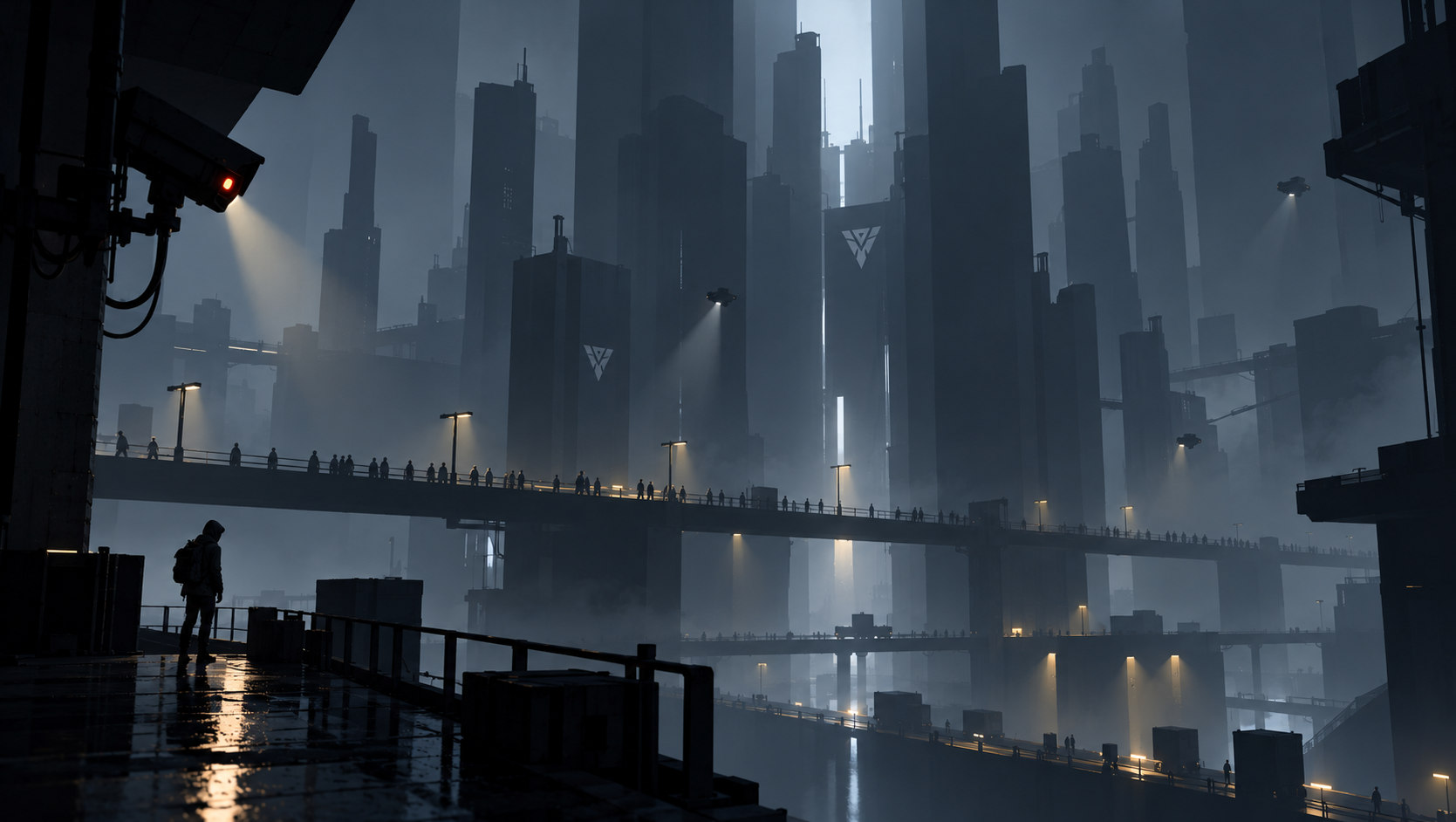
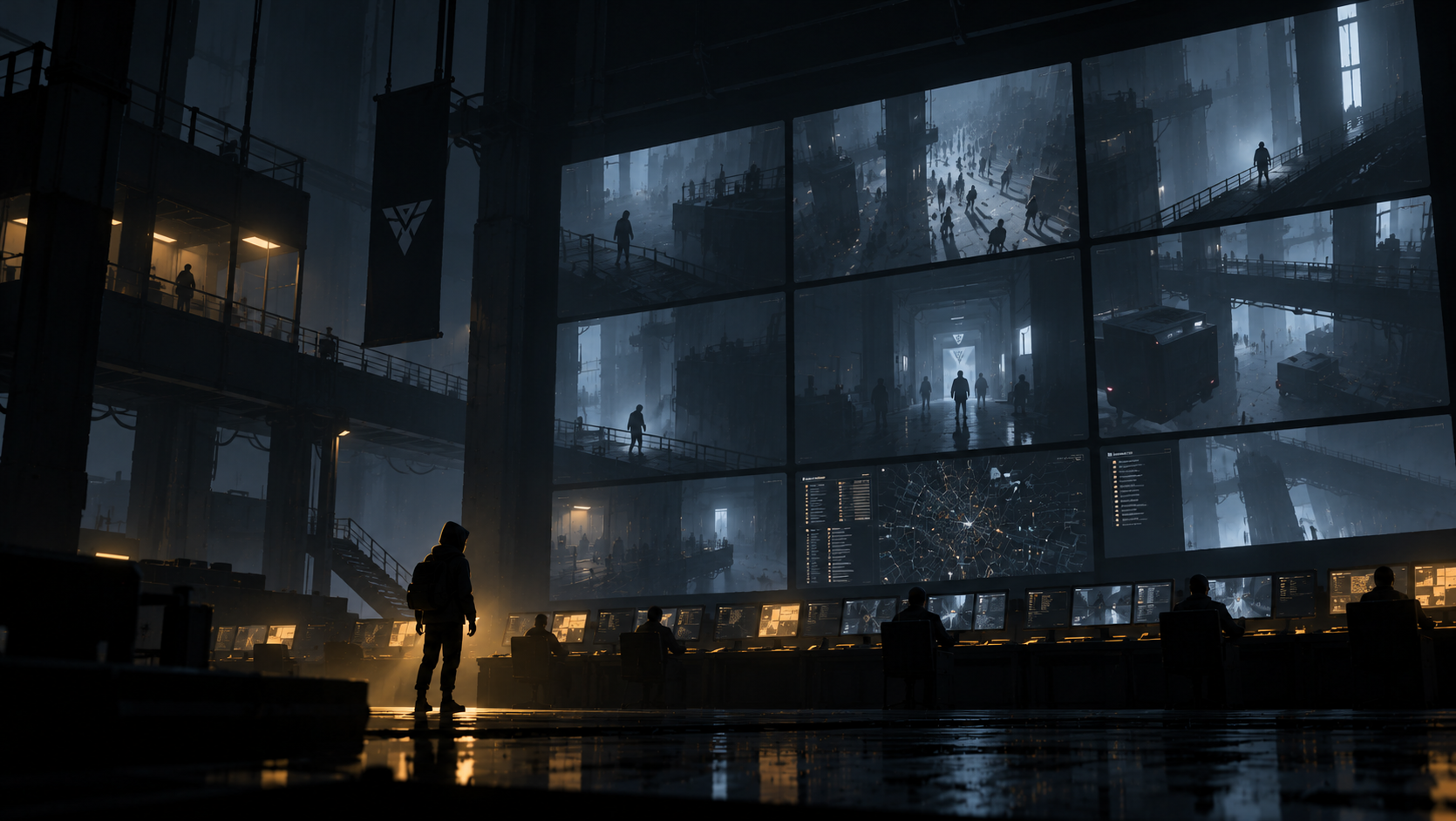
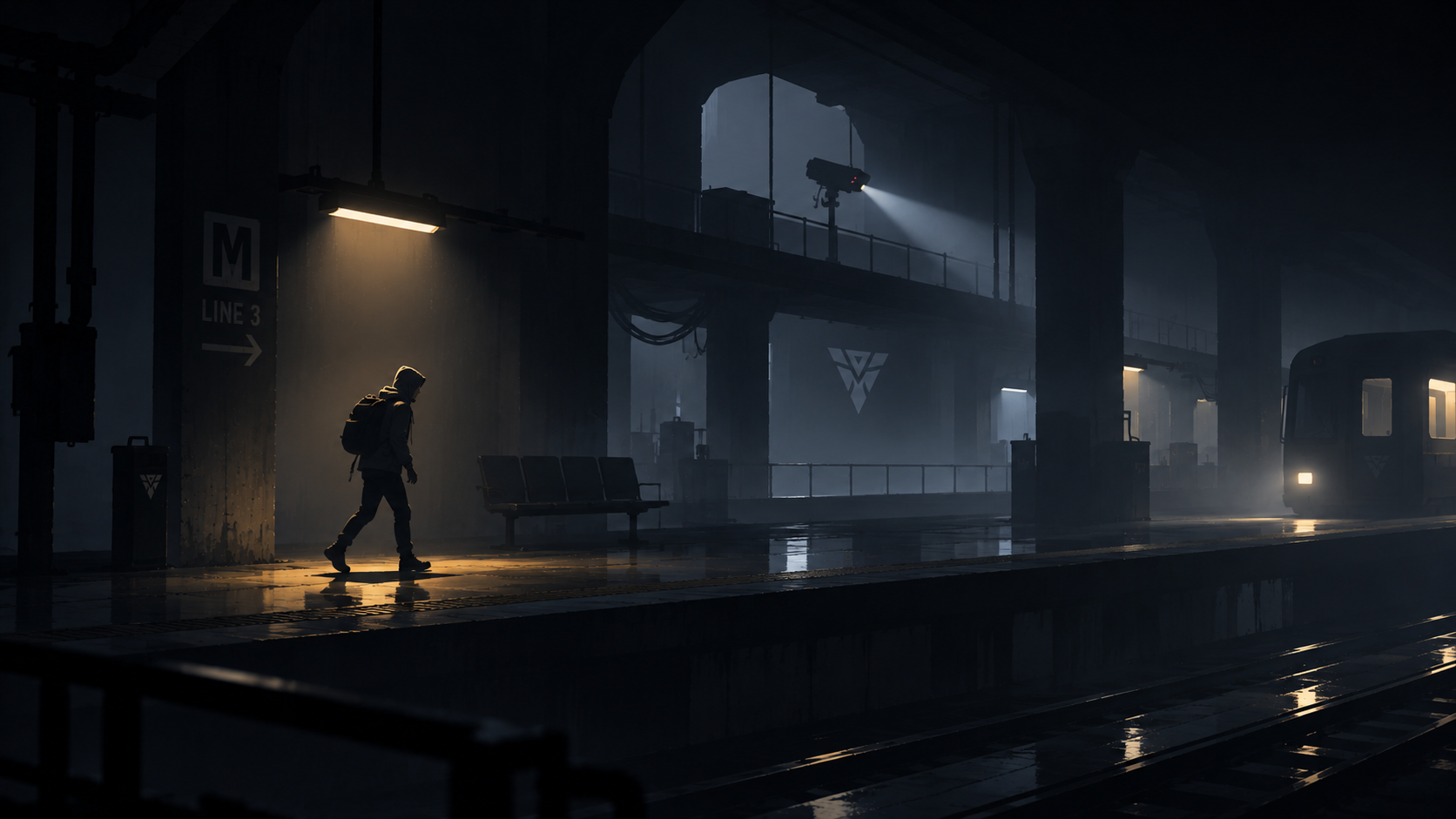
Select an image to enlarge it.
05
EVERYONE
CAN SEE YOU.
EXCEPT YOU.
In a world built on surveillance, your greatest weakness is your own perspective. Discover an experimental game concept where seeing yourself means looking through someone else’s eyes.